
Carlos Arroyo didn't need to be a star to leave a mark. The 6-foot-2 point guard from Fajardo。Puerto Rico, carved out a nine-year NBA career that spanned six teams, and his legacy is built on something less glamorous than highlight dunks: the art of running an offense without turning the ball over. In 2004-05, splitting time with the Utah Jazz and Detroit Pistons, Arroyo posted an assist-to-turnover ratio of 4.4 to 1—a figure that would have led the league if he'd logged enough minutes to qualify. That single stat tells you more about his game than any scouting report: steady, cerebral, unspectacular but deeply effective.His international career, however。is where Arroyo truly flourished. At the 2004 Athens Olympics, he torched the U.S. team for 24 points in Puerto Rico's stunning 92-73 victory—the first Olympic loss for an American men's team since NBA players began competing in 1992. Arroyo sliced through pick-and-roll coverage with a hesitation dribble that seemed almost casual, then hit pull-up jumpers with a shooter's confidence. That game wasn't a fluke;
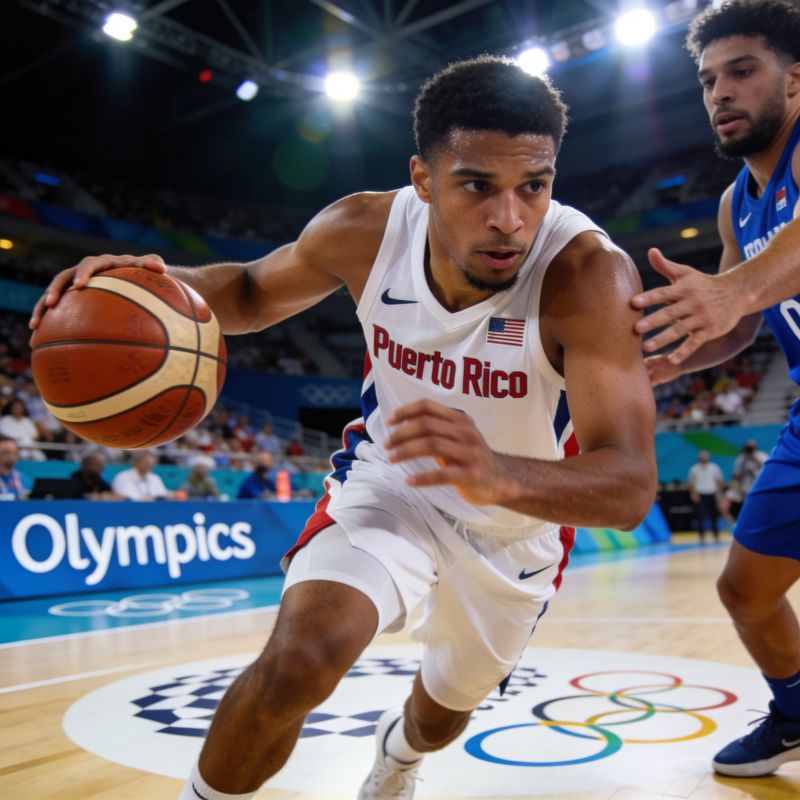
it was a statement. He finished the tournament averaging 18.6 points and 6.4 assists, cementing his status as one of the best guards outside the NBA.What made Arroyo valuable in the league was his fit with contending teams that needed a competent backup. The Pistons acquired him in January 2005 specifically to spell Chauncey Billups, and he responded with 12 points and 6 assists in his debut against Washington. He wasn't a defensive stopper—his foot speed limited him against quicker guards—but he understood angles and rarely got caught out of position. Coaches trusted him. Larry Brown, never easy to please, praised Arroyo's professionalism. That's the kind of endorsement that extends careers.The Puerto Rican national team was Arroyo's sanctuary. He led the island to a silver medal at the 2007 FIBA Americas Championship and gold at the 2011 Pan American Games. In San Juan, he was more than a basketball player;he was a cultural ambassador. I remember watching him play in a friendly exhibition in 2010—the crowd chanted his name during warmups, and he responded by signing autographs for twenty minutes after the final buzzer. That connection with fans never faded, even as his NBA minutes dwindled.By the time he retired in 2020, after stints in Israel, Spain, and his homeland, Arroyo had accumulated over 7,000 professional points across all competitions. His NBA numbers—6.6 points and 3.1 assists per game—won't overwhelm anyone, but statistics miss the point. He was a bridge between Puerto Rican basketball and the global game。
a player who proved that intelligence and composure can compensate for physical limitations. Carlos Arroyo wasn't a superstar, and he didn't need to be. He was exactly what every good team needs: a guard who made the right play, almost every time.